If you have been anywhere near AI news this year, you have seen the letters MCP everywhere. Model context protocol is quickly becoming the standard way to plug AI agents into real business systems. The hard part is separating the hype from what actually helps a company operate.
Here is the practical version of what MCP servers are, why they matter, and how to use them without turning your operation into a science experiment.
What Model Context Protocol Actually Is
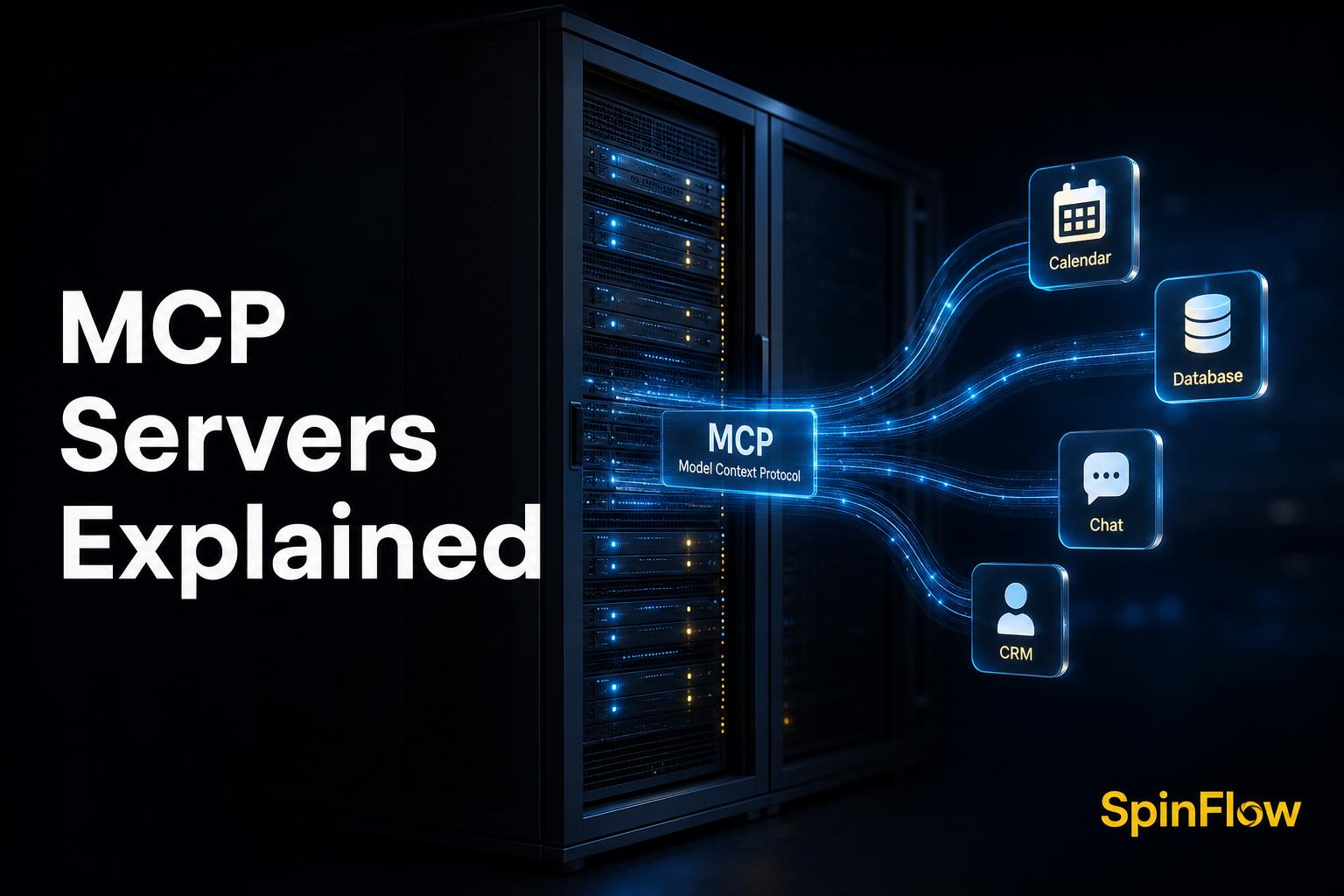
Model context protocol is an open standard that lets an AI model talk to outside tools and data in a predictable way. An MCP server is a small program that exposes a set of capabilities, such as reading a database, updating a CRM record, or sending an invoice, that any MCP aware model can call on demand.
Before MCP, every integration was custom. Every new tool meant new glue code, new auth, and new prompt engineering. MCP replaces that patchwork with one shared handshake, so a single agent can reach many systems the same way a browser reaches many websites.
Why It Matters Right Now
An AI model with no access to your data is a very clever stranger. It cannot see your customers, your orders, your inventory, or your calendar. MCP servers give models supervised access to those systems so they can actually do the work instead of describing it.
- Agents that quote from your live catalog, not a generic answer
- Support replies that reference the customer's real history
- Reports built from your current numbers on request
- Actions taken in the systems your team already uses
Where MCP Fits in a Real Platform
MCP servers are only as good as the systems behind them. Bolting MCP onto a stack of disconnected tools still leaves an agent stitching together fragile answers. The advantage shows up when your business already runs on one platform, so a single MCP surface can safely expose CRM, invoicing, support, and analytics with the right permissions on each.
That is how we build at SpinFlow. Our AI integration layer wires agents into the exact data they need, and because everything lives on one custom platform, MCP calls hit real business context instead of a maze of third party APIs.
See what MCP looks like on a platform built around your business.
Book a Discovery MeetingWhat Owners Notice First
The first change is speed. Questions that used to require pulling three reports get answered in a sentence. The second change is trust. Because the agent is reading live data through MCP, the numbers match what the team sees, so the whole company starts using AI instead of arguing with it.
The third change is quieter and bigger. Once agents can act through MCP, entire categories of manual work stop needing a human trigger.
A Practical First Step
Pick one system your team asks questions about every day, such as the CRM or the invoice ledger. Expose read only access through MCP first, prove the agent's answers, then open write access one action at a time. Frontier models keep improving, and building on a platform that changes the week you need it to means each upgrade reaches your MCP surface the same day it ships.
Keep reading
If you want a map of where MCP would help your business, book a discovery meeting and we will walk it with you.