Logistics and Warehousing
Denver Express
A Duda to owned-platform migration that kept every page and gained a real blog
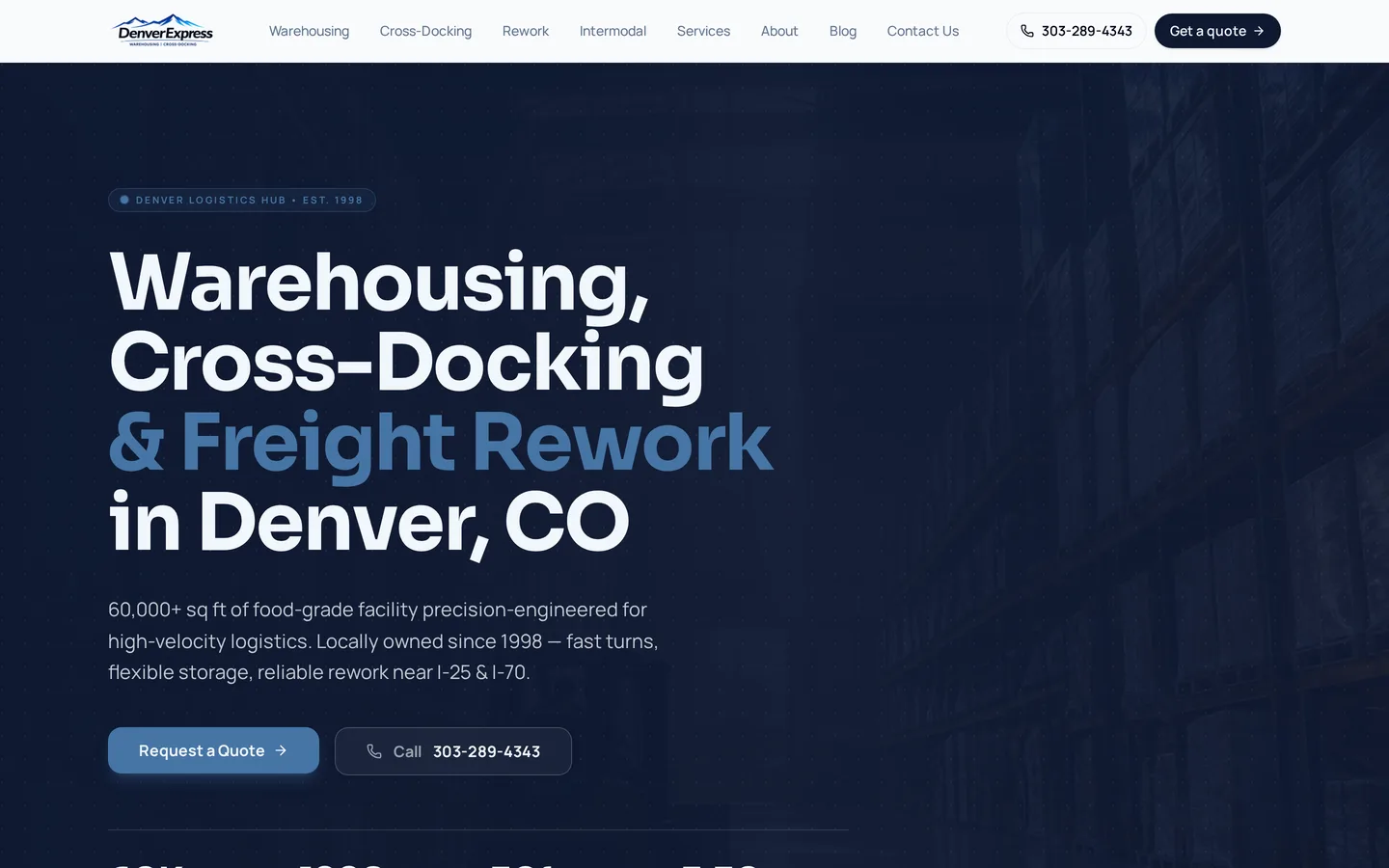
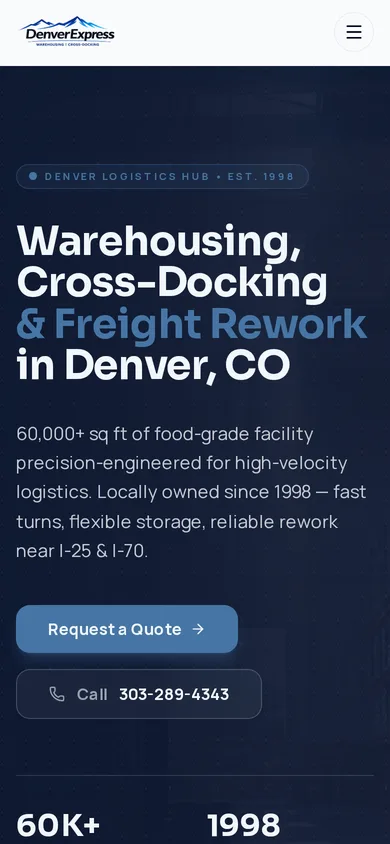
Denver Express is a Denver warehousing, cross-docking and freight rework operation running a 60,000 square foot food-grade facility. The site moved off Duda onto an owned server-rendered platform, page for page, and picked up capabilities the hosted builder could not provide.
Hosted site builders are fine until the business outgrows them. The content is trapped in someone else's editor, the blog is an afterthought, the SEO controls stop where the platform decided they stop, and there is no path to add anything the vendor has not already shipped.
The brief
What the engagement had to deliver
Denver Express came to us with a clear set of outcomes rather than a page count. Everything below was agreed before design started.
- Migrate the existing site off Duda without losing content, structure, or search position
- Match the original closely enough that the migration is invisible to customers
- Add a real blog with categorization, interlinking and SEO control
- Add a contact path with spam protection that the hosted builder could not provide
Key challenges
What made this build harder than a template
- A page for page migration means every URL, every heading and every piece of content has to be accounted for, and search does not forgive omissions
- Logistics buyers care about specifics, facility size, dock capability, cutoff times, so the content had to keep its precision rather than being smoothed into marketing copy
- The migration had to run in phases against a live site rather than as one cutover
- Improving the site while replicating it are opposing instructions and both were in the brief
Our approach
How we built it
We treated replication and improvement as two separate passes rather than trying to do both at once. First the site was rebuilt page for page so the migration itself carried no risk. Then the capabilities Duda could not offer were added on top: a blog with real categorization and internal linking rather than a chronological feed, per-page SEO control, and a contact path with spam protection. Server-side rendering on Cloudflare Workers means the whole thing arrives complete for crawlers, which a hosted builder can only approximate. Facility specifics stayed precise, because in freight the numbers are the pitch.
The front end
What visitors see
- Page for page rebuild of the existing site with content and structure preserved
- Service pages for warehousing, cross-docking, freight rework and intermodal
- Blog with categorization, internal interlinking and per-post SEO control
- Contact path with spam protection
- Facility specifics preserved as concrete numbers rather than smoothed into marketing copy
- Server-side rendered on Cloudflare Workers
- Full mobile treatment
The stack
What it is built on
- TanStack Start
- React 19
- Tailwind v4
- shadcn/ui
- Server-side rendering on Cloudflare Workers
Results
What changed
- A complete migration off a hosted builder with content and structure intact
- A blog that functions as a search asset rather than a chronological feed
- Per-page SEO control that the previous platform did not expose
- A site the business owns outright with no vendor ceiling on what can be added next
Common questions
Questions about the Denver Express build
What is involved in migrating a website off Duda?
A page for page inventory first, then a rebuild that preserves URLs, headings and content, then verification that nothing was dropped. The risk in a migration is almost never the build, it is the pages nobody remembered were there.
Will migrating a website hurt search rankings?
It can, and it usually does when URLs change or content is quietly trimmed. Handled as a strict replication first and an improvement pass second, the migration itself carries very little risk.
Why leave a hosted site builder at all?
Because the ceiling is set by the vendor. When the business needs a capability the platform has not shipped, there is no path forward except waiting or leaving, and the content is in someone else's editor either way.
- Services
- Website, Platform Migration, SEO Foundation
- Sector
- Logistics and Warehousing
- Client
- Denver Express
- Build window
- Phased build
Capabilities used
What this platform runs on
Building something similar in this sector? See the logistics and warehousing platform guide, or read how a custom business operating system fits together, then book a discovery call.
Related work
Other platforms we have built
Logistics and 3PL
SkidFlow
SkidFlow is a multi-tenant warehouse management system built for small third-party logistics operations. It runs as a mobile-first progressive web app on the warehouse floor, a full web console for managers and admins, and a read-only portal for the customers whose freight is moving through the building.
Underground Utilities
Denver Sewer and Water
Denver Sewer and Water is a privately owned family underground line company in Denver. It is not affiliated with Denver Water or the City and County of Denver, and a large part of the site's job is making that clear while still winning the searches those names dominate.
Aerospace
Super Universal
Super Universal moved off Duda onto an owned platform with substantially more depth than the original. The rebuild expanded a small brochure site into a properly structured set of capability pages designed to be found by the specific technical searches the business should be winning.
Want a site that works this hard for your business?
Bring us the workflow you are tired of duct taping together. We will show you what it looks like as one owned platform.